The Makers
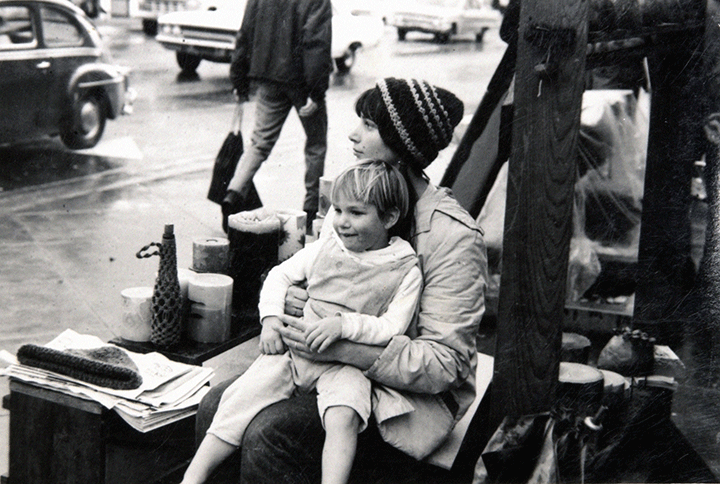
Some of my earliest memories are of Telegraph Avenue in Berkeley, California.
Long before I thought of myself as an artist, I was surrounded by people who made things. My grandmother's companion, Russ Egert, crafted candles that we sold on Telegraph Avenue. Artists, musicians, writers, and wanderers seemed to drift through the neighborhood. To me, it all felt normal.
Creativity was woven into family life. Relatives built sculptures, played music, painted, and created things simply because they felt compelled to do so. Looking back, I realize I grew up in an environment where making things was not treated as something unusual. It was simply part of everyday life.
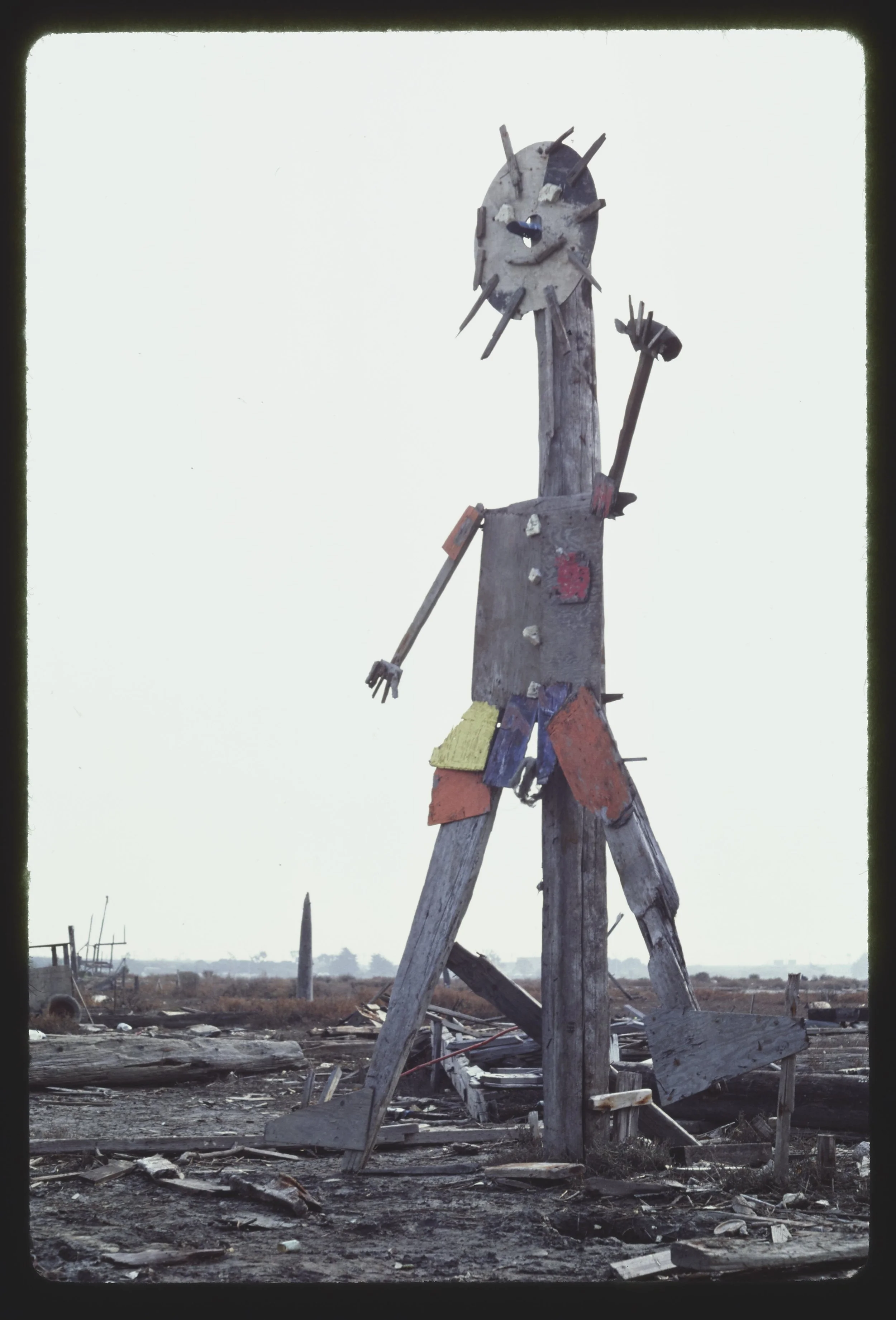
Some weekends were spent exploring the Emeryville Mudflats, where enormous sculptures rose from driftwood, scrap metal, and whatever else could be found along the shoreline. Members of my family built some of these structures themselves. One that remains vivid in my memory was a giant figure with oversized teeth. I found a discarded baby doll, and with my family's help we nailed it to the sculpture's hand. It stood there overlooking the bay, strange and magnificent.
At the time I didn't think of any of this as artistic influence. It was simply the world around me. Only later would I realize how much these early experiences shaped the way I saw imagination, creativity, and the possibilities hidden within ordinary things.
Before the forests, mountains, and solitude of Austin Creek, there was Telegraph Avenue.
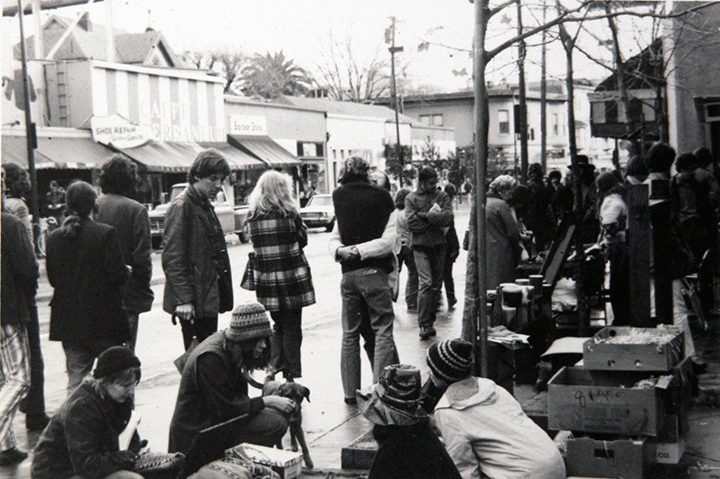
Telegraph Avenue, Berkeley, California, early 1970s
Man Mountain
When my parents separated, my world changed.
For a short time I lived with my grandmother in Stinson Beach, in a house perched on the cliffs above the Pacific Ocean. Before long my mother and I settled farther north along Austin Creek in the Russian River country. My father remained very much a part of my life, and every other weekend I stayed with him in Oakland. Without realizing it, I had begun moving between very different worlds.
Austin Creek became the place where I learned to be alone.
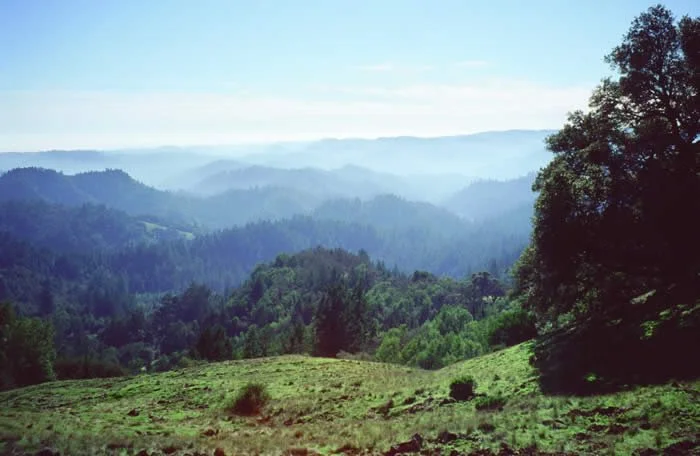
Most days I disappeared into the woods. There was a swimming hole a short walk from our house where I spent long afternoons, and behind us rose a mountain that seemed enormous to a little boy. I explored the creek, climbed the hillsides, and wandered wherever my curiosity led me. I wasn't looking for anything in particular. I simply wanted to see what was around the next bend.
My mother called it Man Mountain. She told my brother and me that an ancient spirit lived among its steep ravines and cliffs. Whether she believed it herself or simply wanted the mountain to feel more magical, I never knew. As a child, I accepted the story without question. The mountain fascinated me.
It also frightened me.
One day I climbed all the way to the top. Near the summit I came upon the remains of a deer in the final stages of returning to the earth. I stood there for a long time. The wind moved through the trees below me, and the redwood forest stretched to the horizon in every direction. I didn't fully understand what I was seeing, but I knew I was witnessing something ancient and honest. Nature wasn't hiding anything. Life and death existed together without apology. I wasn't frightened by it. I was captivated.
Not far away, my grandmother Annabelle and her companion, Russ Egert, had settled in Monte Rio after selling their home in Stinson Beach.
My grandmother was unlike anyone else I knew. She preferred sitting on the floor, and if a chair felt too high she would shorten its legs rather than change her habits. Having grown up in the Philippines, she carried something of that world with her. I couldn't have explained what it was as a child, but I sensed it all the same. Looking back, I don't think she ever tried to teach me how to think. She simply lived in such an authentic and unconventional way that other possibilities became visible.
Russ meanwhile was consumed by a single idea: building a flying boat. Their home was filled with wooden models, fiberglass hulls, wing assemblies, sketches, and mechanisms held together with bits of string. Every visit felt like stepping into an inventor's workshop where nothing was impossible if you were willing to keep experimenting.
To this day, the smell of fiberglass resin takes me back to those afternoons.
It isn't just a smell. It's the scent of possibility.
Russ never treated imagination as fantasy. If he could imagine a flying boat, then the next step was simply to begin building one. Watching him work taught me that there are no real limits to imagination until we decide to place them there ourselves.
Evenings followed their own quiet rhythm. We would gather to watch Mystery! on PBS, mesmerized by Edward Gorey's haunting illustrations that introduced every episode. Around the same time I was given Just So Stories by Rudyard Kipling, illustrated by Étienne Delessert. I read the stories again and again, but it was the illustrations that held me captive. They were beautiful, mysterious, playful, and slightly unsettling. Even now, I can still recognize traces of those images in my own work.
My weekends with my father in Oakland offered another kind of education. Like many energetic five- and six-year-olds, I occasionally found myself sitting on the edge of the bathtub during a time-out, waiting to calm down. Across from me hung two prints: Hieronymus Bosch's The Garden of Earthly Delights and Paul Klee's Fish Magic. What began as punishment quickly became something else. I would lose myself in those paintings, wandering through every impossible creature, hidden figure, and strange corner of their worlds. Looking back, I sometimes think those quiet half hours taught me as much about imagination as anything else during my childhood.
When I think back on those years, I don't remember them as separate experiences. I remember them as one continuous world. The creek. The mountain. The smell of fiberglass. Edward Gorey's shadowy figures. Delessert's fantastic illustrations. Bosch's impossible landscapes. Paul Klee's dreamlike visions. They all became part of the same conversation taking place inside a young imagination.
At the time, I had no idea any of it would matter.
Among the Douglas Firs
Not long afterward, my mother met a man who would change the course of our lives once again. He lived deep in the Douglas fir forests of the North Cascades. After spending a week with him in Austin Creek, she drove my brother and me north to meet him. We wanted nothing to do with the idea. A few months later, we packed our belongings and moved into his cabin. The cabin had one room. Four people lived there. There was no electricity, no running water, no bathroom, only a wood-burning stove and a few propane lamps. It was unlike anything I had ever known.
We adapted quickly because there wasn't much choice. Water came from the well. Firewood had to be cut, split, stacked, and carried. Outhouses eventually filled and new ones had to be dug. Trails disappeared beneath fallen trees. Winter storms reminded us who was really in charge. Life revolved around whatever the forest required that day.
When the work was finished, the forest became my playground and my classroom. I wandered for hours with little more than my thoughts, books, and sketchpad. I was still making sumi ink drawings then, filling pages with strange figures and imagined worlds. At the time I thought I was simply drawing. Looking back, I suspect I was beginning a conversation that has never really ended.
The Douglas fir forest had its own language. Even on calm days it spoke in slow creaks and whispers as enormous trunks shifted against the wind. During storms those whispers became deep groans that rolled across the mountainside. Lying awake in the cabin at night, it sometimes felt as though the forest itself was breathing.
Darkness arrived differently there. It wasn't the gradual fading of suburban streetlights but a true darkness that settled beneath the trees long before the sun disappeared. Once night came, the forest became almost impossible to see beyond the reach of a flashlight. Every snapped twig or distant call seemed magnified. Bears were simply part of the landscape. They were never the monsters of storybooks, just neighbors whose presence demanded respect.
I spent so much time alone beneath those trees that they eventually stopped feeling like scenery. They became companions of a sort. The forest had moods. The same trail could feel entirely different depending on the weather, the season, or something I could never quite explain. Some mornings it felt welcoming, washed clean by rain and filled with shafts of sunlight. Other days it seemed ancient, indifferent, almost unknowable. Without realizing it, I began paying attention to those moods as carefully as I paid attention to the trail beneath my feet.
Looking back, I realize I was learning something I wouldn't have had words for then. The forest asked nothing of me except that I pay attention. To weather. To silence. To tracks in the mud. To the changing light beneath the trees. Years later I realized painting asks much the same thing.
Life in the Cascades wasn't all quiet walks through the woods and afternoons spent drawing. Much of it revolved around my mother's boyfriend, whose enthusiasm for the wilderness often exceeded his sense of direction. My brother and I eventually came to refer to his outings as "death marches." Looking back, they became some of the funniest memories of those years, although they rarely felt that way at the time.
The routine was usually the same. We'd spend hours following logging roads before he spotted what looked like a shortcut on the map. "Let's go, boys!" he'd say, and off we'd disappear into the brush.
One death march has become family legend. We had spent hours winding our way up remote logging roads when he noticed what he was convinced was a fisherman's trail marked on the map.
"Let's go, boys!"
Within minutes the trail disappeared into a wall of salmonberry bushes and tangled undergrowth. Out came the machetes.
We hacked our way forward for what felt like forever until darkness quietly settled over the forest. Before long we had absolutely no idea where we were.
Then came the sound of branches snapping all around us.
For the first time I noticed that he looked genuinely worried.
He pointed to a towering Douglas fir and told me to climb it to see if I could spot the lake we had been trying to reach. By the time I reached the top, the forest had disappeared into darkness. I couldn't see anything.
We kept moving anyway.
The snapping branches continued just beyond the reach of our flashlights. That's when I noticed he was clutching his 30-30 rifle like a grandmother clutching her purse on a dark subway.
“Should I be worried?” was the main thought running through my head at this point.
Somehow, by pure luck, we stumbled onto the lake several hours later. He quickly strung up a tarp shelter that could generously be described as a tent.
Proud of his handiwork, he climbed inside, looked at us with complete confidence, and declared,
"We're in hog heaven, boys!"
That's when the storm arrived.
We had pitched the shelter on a hillside, and before long an actual river was flowing straight through the middle of it.
We didn't get much sleep that night.
Finding the Medium
Eventually my mother realized the mountain wasn't the easiest place to raise two boys. We packed our belongings once again and traded the Douglas firs for the small logging town of Monroe, Washington.
Moving to Monroe felt like stepping into an entirely different world. After years without electricity, running water, or even a proper bathroom, sidewalks, grocery stores, and school buses seemed almost ordinary to everyone else. To me they still carried a quiet sense of novelty.
Life became more predictable, but inwardly I was still searching. Looking back, my life and art took a backseat to a much larger question: discovering who I was.
I continued filling sketchbooks, but my interests began to change. Sumi ink gradually gave way to graphite. I became fascinated by the technical mastery of Renaissance painters and sculptors, spending countless hours reproducing their work in pencil. I wasn't trying to become a copyist. I was trying to understand how great artists saw form, light, and structure. Looking back, I don't think I produced anything remarkable during those years. I was simply learning a new language.
The move to Monroe wasn't the last change. Before long I found myself living with my father in Berkeley, California. It was another chance to begin again, another new school, another unfamiliar place.
The change proved short-lived. Only a few months after I arrived, my father and his wife decided to move to Denver. Suddenly I was the new kid again, this time beginning my freshman year at Arapahoe High School.
During that year I met Dave Edwards. We sat beside one another in several classes, and through him I discovered punk and alternative music. It was another reminder that there were entire creative worlds I had not yet encountered.
Years later Dave would become the singer of the band 16 Horsepower, but at the time he was simply a friend opening a door. I began to understand that painting did not exist in isolation. A lyric, a melody, or simply the atmosphere left behind by a song could stir images and emotions that later found their way onto canvas.
By the end of my freshman year, I knew I wanted to return to Washington. I moved back to Monroe, where I finished high school and continued drawing while trying to understand what direction my life might take.
Around sixteen, graphite was joined by oil pastels and then oil paint. Every new medium opened another door. I wasn't searching for a style yet. I was searching for possibility. Each material seemed to ask a different question, and I wanted to learn how to answer all of them.
By then I had grown accustomed to beginning again. New schools, new towns, and new landscapes had become part of the rhythm of growing up.
Monroe never felt large enough to contain the life I imagined. On weekends, my friends and I pooled whatever money we had and drove into Seattle. Sometimes I paid someone to take me there and trusted that I would find a ride, or hitchhike back home. I didn't yet know what the city would become to me. I only knew I wanted to be closer to it.
Seattle Calling
When high school ended, I finally found myself making decisions that were entirely my own. Like many young adults in the mid-1980s, I wasn't following a carefully laid plan. I was simply trying to find my way.
The first stop was Denver.
I packed up my aging three-tone 1970s Honda Civic and headed east. The journey didn't go quite as expected.
Somewhere along the way the car gave up on the public beach in Coeur d'Alene, Idaho. For the next two weeks that old Honda became both my transportation and my home while I tried to figure out what came next.
Eventually I made it to Denver, where I spent the summer working alongside my father hanging wallpaper and painting houses. It wasn't unfamiliar work. I'd been helping him since I was eight years old.
There was nothing wrong with the work. I simply knew I couldn't spend the rest of my life doing something that no longer felt like my own path.
So I pointed the car back toward Seattle.
First Hill
Seattle was everything Monroe wasn't.
The apartment wasn't.
Three of my high school friends and I shared a run-down apartment on First Hill that remains, to this day, the worst place I have ever lived.
Cockroaches seemed to outnumber the tenants.
The apartment offered very few reasons to stay indoors.. Most days we escaped to Broadway on Capitol Hill, where we spent hours talking, watching people, and trying to figure out what adulthood was supposed to look like.
The apartment wasn't much of a place to make art, but I kept drawing anyway. Like so many times before, a sketchbook required very little space. Looking back, I don't think I ever seriously considered stopping. Creating had simply become part of everyday life.
The apartment itself seemed to have surrendered long before we moved in.
A food truck from the local food bank made its way through the hallways several times a week, handing out groceries to many of the residents. The apartments surrounded a swimming pool that had long ago stopped being a pool. It had become a murky green pond filled with abandoned furniture, food, and whatever else had slowly accumulated over the years.
Downstairs lived four or five bikers along with a woman we knew only as "Squeaky." Every so often she would wander into our apartment, making an odd squeaking noise with every step, earning the nickname without anyone ever asking her real name.
One afternoon shouting erupted downstairs.
Then came the unmistakable sound of breaking glass.
One of the bikers had thrown another straight through the apartment's front picture window.
Standing there looking at the shattered glass, I remember thinking:
This probably wasn't leading anywhere good.
Not long afterward my roommate Jeff mentioned something called Job Corps, a vocational training program in Astoria, Oregon.
By then I was becoming rather good at beginnings.
I didn't have a plan. I only knew I needed a different direction.
Job Corps sounded like it might be one.
Astoria: Finding My Voice
Job Corps wasn't what I expected.
I arrived expecting another temporary stop along the way. Instead, I found something I hadn't experienced in quite some time: structure.
More than five hundred young adults from every imaginable background lived and trained together. Everyone had a different story. Everyone had arrived there by a different road. For the first time, my days settled into a rhythm, and I found that I liked it.
Then...
The art.
Something unexpected happened in Astoria.
For the first time, I began listening for the paintings rather than trying to invent them.
Until then I had been learning techniques, experimenting with materials, and borrowing ideas from artists I admired. In Astoria I started looking inward, searching for the quiet place from which the images themselves seemed to emerge.
Looking back, I think that was the beginning of my own visual language.
By chance I had brought my record player with me.
Music had become every bit as important to me as drawing, and I spent what little money I had ordering records through a local shop.
One afternoon, while picking up another order, a man struck up a conversation.
He liked the records I'd chosen.
That conversation led to an invitation I never saw coming.
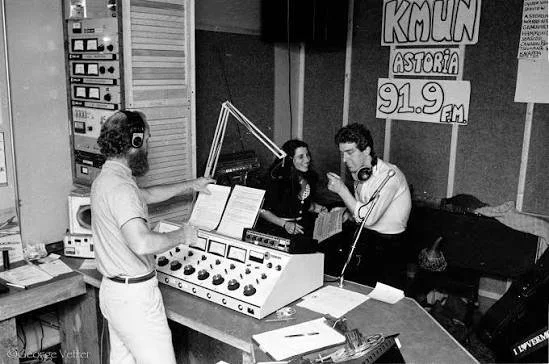
He worked at KMUN, Astoria's public radio station, and asked if I would be interested in hosting a Friday evening program, playing music I selected myself.
For someone beginning to discover his own artistic voice, it felt like another unexpected door opening.
Astoria offered another unexpected opportunity.
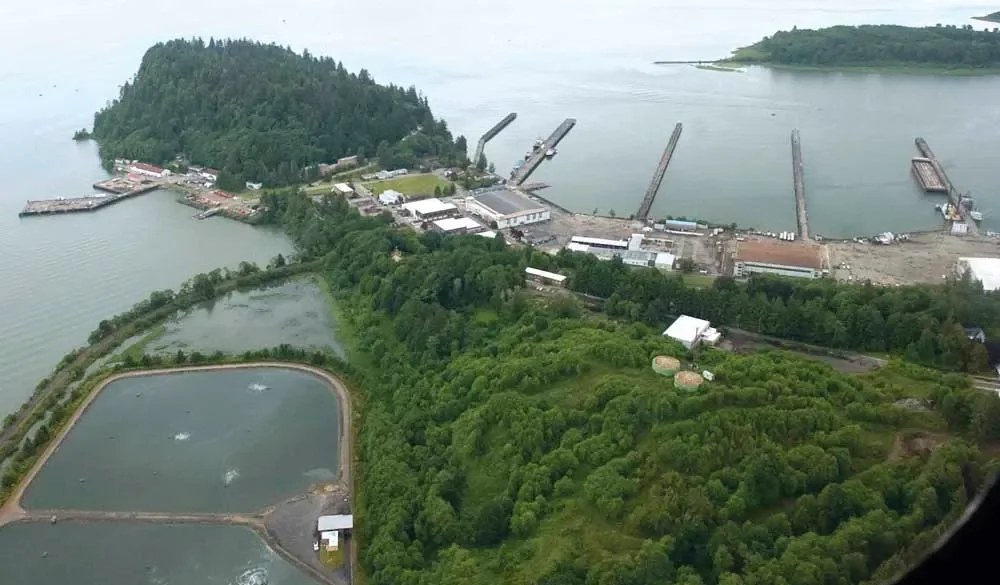
I found work with the Department of Labor, helping people prepare résumés as they searched for employment.
The office sat on a pier over the Columbia River. Between appointments I often found myself looking out across the water. It was peaceful work. More importantly, it felt meaningful. For the first time I realized that creativity wasn't limited to making art. Sometimes it meant helping another person take the next step in their own life.
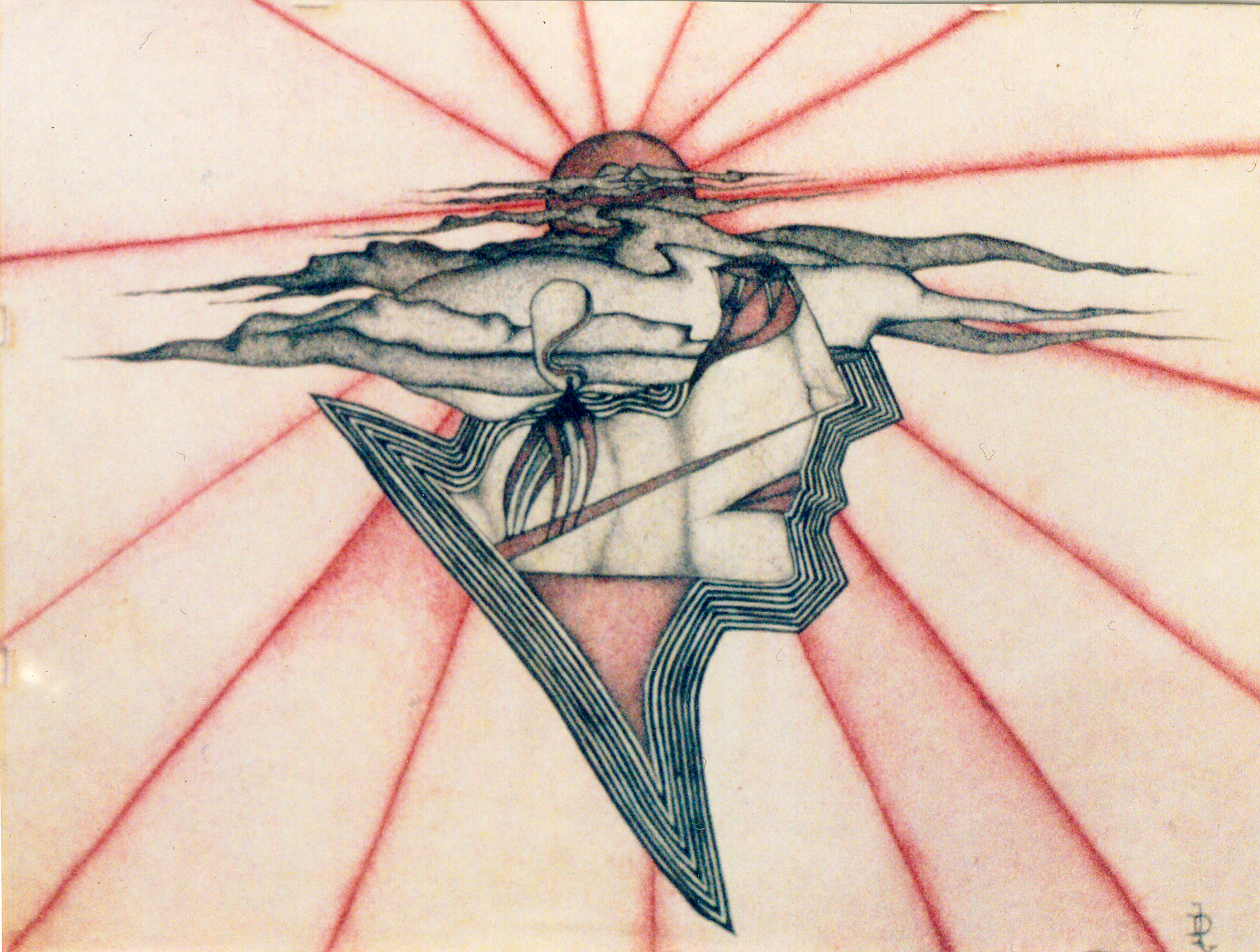
The Long Conversation
When I arrived in Seattle, I rented a room in the University District on Roosevelt Way, directly across the street from a restaurant called the Hungry U.
It wasn't much, but it was mine.
I found work there as a waiter, learning to navigate the controlled chaos of breakfast rushes, college students, and late-night regulars. It paid the rent, but my real attention was somewhere else.
Almost as soon as I settled in, I bought oil paints, canvases, and whatever art supplies I could afford.
Something had shifted.
For the first time, I wasn't studying someone else's way of seeing.
I was beginning to trust my own.
Most evenings, after work, I painted.
Sometimes into the early hours of the morning.
I wasn't trying to create finished masterpieces.
I was following an unfamiliar voice that had quietly begun speaking sometime back in Astoria.
Every painting felt less like an invention than a discovery.
When I wasn't painting, I drifted from one coffeehouse to another. They became extensions of my studio, places where ideas could wander without any particular destination. Some people came to write. Others argued about philosophy, politics, or music until closing time. I mostly listened.
Seattle had begun teaching me in its own way.
One evening I wandered into a small coffeehouse called the Speakeasy.
It felt different.
The owner, Henry, believed that everyone deserved a place to belong.
Artists.
Musicians.
Students.
Homeless people.
Recovering addicts.
Night owls.
If you respected the place, you were welcome.
Before long he offered me a job.
Some nights we didn't lock the doors until dawn.
Henry did have one unusual method of controlling the front door.
A chow chow named Cheesa.
She spent her days chained near the entrance.
If she knew you, she barely looked up.
If she didn't...
She transformed into a furry avalanche of teeth, fur, and righteous indignation.
The Speakeasy sat next door to Giggles Comedy Club.
More than once we'd watch a couple leave a show, spot the fluffy dog, and smile.
"Awwww... look how cute..."
They'd take two more steps.
Then Cheesa would erupt.
The resulting screams usually echoed halfway down Roosevelt.
Rupert stood well over seven feet tall.
At first glance he could be intimidating.
In reality, I don't think he had a bad bone in his body.
Almost every day he'd arrive carrying some object he'd rescued from the street.
A lamp.
A chair leg.
A strange metal bracket.
Whatever it happened to be, he'd carefully trade it for a cup of coffee or half a sandwich.
More than anything, he wanted to know the object would be useful again.
Looking back, he reminded me of a crow.
Always finding things.
Always convinced they'd be valuable to someone.
Then there was Randy.
Randy possessed an extraordinary ability.
He could begin talking about absolutely anything...
...and continue for several uninterrupted hours.
Conspiracy theories.
Government cover-ups.
Secret societies.
Ancient civilizations.
Nothing was too improbable.
The Speakeasy guaranteed him something he valued greatly.
An endless supply of people who were too polite to escape.
For reasons I never understood, Randy decided I was an "energetic vampire" who was somehow draining his life force.
I've been called many things over the years.
That was a first.
Several nights a week, Narcotics Anonymous meetings were held across the street.
Afterward, many of the attendees wandered into the Speakeasy.
If coffee could be considered a gateway substance, we were probably guilty.
The conversations continued long into the night.
Henry never seemed to mind.
Everyone deserved a place to sit.
Everyone deserved to be heard.
One evening my paintings went up on the walls.
It was my first exhibition.
Looking around the room, I realized something.
The paintings weren't hanging in a gallery.
They were hanging exactly where they belonged.
Among the conversations that had helped bring them into existence.
Leaving Seattle:
Eventually I moved into a house near Greek Row in the University District. A punk band called Christ on a Crutch lived there as well, which probably tells you something about the atmosphere of the place.
Our landlord wasn't particularly enthusiastic about the arrangement. His feelings toward the band eventually extended to the rest of us, and before long we were told we had to leave.
The band responded in the manner one might expect from a punk band being evicted from its house.
They threw a concert.
In the living room.
It wasn't exactly an attempt to repair relations with the landlord.
By punk rock standards, however, it was magnificent.
Afterward, with the house disappearing beneath me and no particular reason to remain, I decided it might be time to leave Seattle for a while.
Once again, I headed for Denver.
Paris on the Platte Cafe
Denver initially felt like a return to something familiar. I moved back in with my father and once again helped him with his wallpapering and house painting business, work I had been doing in one form or another since childhood.
Then my brother told me about a place called Paris on the Platte.
It was part coffeehouse, part bookstore. It was exactly the kind of place that always seemed to find me. My brother and I began spending evenings there whenever he was in town.
One night I realized I'd lost a twenty-dollar bill somewhere along the way.
Twenty dollars was a lot of money to me then.
I assumed it was gone.
The following evening my brother returned from Paris on the Platte with surprising news. He had mentioned the missing money to the owner, Jeff, who told him he'd found it and that I should come back and claim it.
So I did.
Jeff and I started talking. Somewhere in the conversation I mentioned that I was looking for work and how much I liked the café.
He told me I could work there if I wanted to.
I said yes.
Just like that, a twenty-dollar bill I thought I'd lost led me through another door.
Paris on the Platte would become part of my life for years.
Before long I moved into a house in Denver's Highlands with a friend named Josh Gibson. We had met while working at Paris on the Platte, and it didn't take long to discover that we shared the same curiosity about music, conversation, and the world around us.
Josh possessed an extraordinary ability to know seemingly everyone. Through him I was introduced to another side of Denver that I probably never would have discovered on my own. His family had played an important role in preserving Denver's jazz scene through the Rocky Mountain Jazz Party, and before long he was introducing me to jazz with the same enthusiasm that others had once introduced me to punk rock.
Our evenings rarely followed much of a schedule. We drifted between places like El Chapultepec, known simply as "The Pec", and the Wazee Supper Club, listening to musicians who treated every night as though it mattered. Somewhere between jazz clubs, classic rock, punk, and grunge, my musical landscape grew considerably wider.
Our house seemed to operate under an open-door policy. Friends arrived unannounced. Music was almost always playing. Conversations stretched late into the night. Chess games unfolded beneath clouds of cigarette smoke while records competed with laughter for control of the room.
Looking back, I can see that these gatherings influenced my paintings as much as museums ever had. Creativity wasn't confined to the studio. It lived equally in conversation, music, friendship, and the unpredictable energy of people sharing the same space.
Although Denver had become increasingly social, I still spent enormous amounts of time alone.
By then I'd discovered mountain biking.
The bicycle became another way of exploring.
I wasn't interested in racing or organized trails.
I liked disappearing into the city itself.
The Colorado & Southern rail yards became my wilderness.
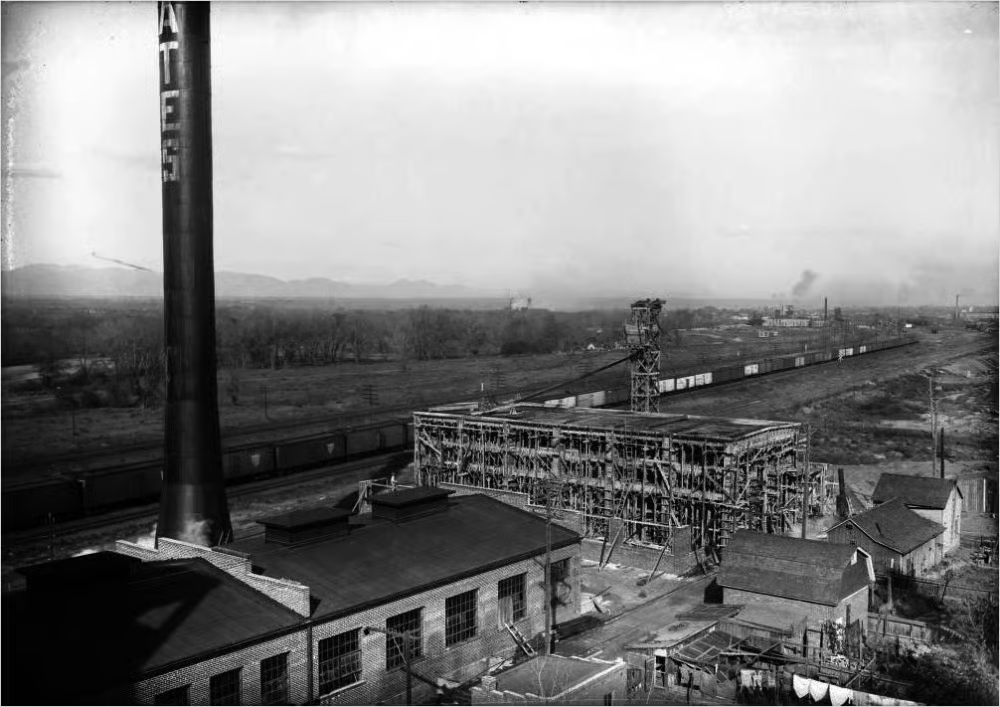
Long before Elitch Gardens was built there, the area felt almost post-apocalyptic. Empty warehouses. Rusting rail lines. Forgotten industrial buildings slowly surrendering to weeds and weather. Packs of feral dogs completed the landscape.
Most people probably wouldn't have called it beautiful. I did.
I spent countless hours riding through those landscapes.
Sometimes through snow.
Sometimes weaving through traffic simply because I loved the sensation of speed.
Looking back, I realize I wasn't looking for danger.
I was looking for freedom.
More than anything, I was looking for space to think.
Every so often I would hear from Henry back in Seattle. He wanted to know how I was doing, what I was working on, whether things were going well.
Denver had given me another community and another place to grow. I had friends, work, and a creative life taking shape around me.
But I missed Seattle.
Eventually, the pull became impossible to ignore.
So I packed again.
The Yellow House
Belltown
It was the first time I had ever lived alone.
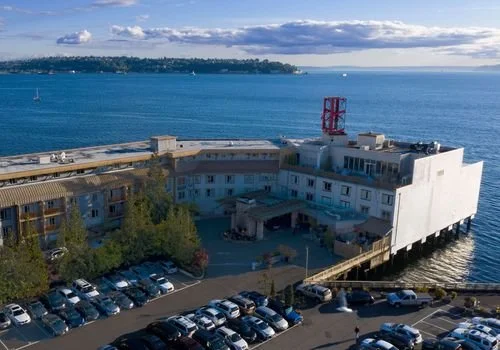
I found a small apartment in Belltown overlooking the Edgewater Hotel and Elliott Bay. It wasn't large and it certainly wasn't luxurious, but after years of cabins, shared houses, roommates, and coffeehouses, it felt enormous.
Every morning I found myself looking out over the water. Ferries crossed the bay. Tugboats moved slowly through Elliott Bay. The city was only a few blocks behind me, yet somehow the apartment felt surprisingly quiet.
Construction had served its purpose, but I knew it wasn't where I wanted to stay. One afternoon I wandered into DeLaurenti, the Italian delicatessen at the entrance to Pike Place Market. They happened to be looking for someone to manage the pizza window.
Once again, life quietly opened another door.
My mornings began with a walk to Pike Place Market before most of Seattle had finished waking up.
Right across the street from my apartment was the Millionaires Club, a service for the homeless. Living on Western Avenue, I stepped into that reality every morning. Some days I had just enough money for the bus and a cup of coffee. Other days I didn't. It made it difficult to pretend there was a sharp line between people who were struggling and everyone else. Most of us were simply trying to keep moving forward.
At DeLaurenti, I'd select fresh vegetables for the day's pizzas, gather cheese and cured meats from the deli, unpack the dough, and slowly prepare for the rush that would come later. Before long my world settled into a familiar rhythm. Mornings at DeLaurenti. Evenings at the Frontier Room, where my friend Randall worked the grill and breakfast somehow always seemed to cost less than it should. The Cyclops Café next door became another place to draw, think, and watch the city drift by.
The Frontier Room had its own cast of regulars.
There was Colleen, who spoke in a voice weathered by years of cigarettes and hard living. She was perpetually worried that she was going to lose her feet. In the same conversation she'd tell me she'd donated all of her assistance money to the church before casually mentioning that she'd taken a sailor home the night before. She was impossible to categorize, and I suspect she preferred it that way.
Behind the bar was Nina.
Nobody seemed interested in testing her patience. She had a quiet authority that kept the room in order without ever needing to raise her voice. She'd seen every kind of customer imaginable, and somehow managed them all with the same unwavering confidence. The Frontier Room wasn't polished or fashionable, but it had a character entirely its own, and people like Colleen and Nina were very much a part of it.
On days when I wasn't working, my walks often carried me farther south into Pioneer Square. The OK Hotel and the Pioneer Square Saloon became regular stops, places where artists, musicians, and every imaginable character seemed to cross paths.
Without realizing it, I had fallen into a rhythm that suited me perfectly. Work. Coffee. Drawing. Painting. Long conversations. Then back to the apartment, where another canvas waited.
Late at night the city became my playground. My mountain bike wore completely bald slick tires, perfect for riding pavement instead of trails. I loved matching the rhythm of traffic, occasionally even overtaking cars. It wasn't about danger. It was about movement.
Around the same time I began running long distances through the city. Somewhere along the way I discovered the runner's high, that strange point where physical effort quietly gives way to clarity. Like riding, it became another way of thinking. Some of my best ideas seemed to arrive not while I was sitting still, but while I was in motion.
I wish I had access to a camera during those years. Hundreds of paintings disappeared into the world without ever being documented. At the time it never occurred to me that one day I'd want a record of them. I was far more interested in making the next painting than preserving the last one.
Back to Denver
Denver (One More Summer)
When I arrived back in Denver, it felt as though very little had changed.
Josh's house was still full of people. Music drifted through the rooms at all hours, someone was usually making plans for the evening, and conversations seemed to continue wherever they had left off the night before.
I brought with me a collection of acrylic paintings and oil pastels from Seattle. Jeff offered me another exhibition at Paris on the Platte, and to my surprise several of the pieces sold. It was encouraging, not because I suddenly imagined a career waiting for me, but because people were beginning to connect with the work.
Around that time Jeff paired me with another assistant manager named Neil.
Neil was an artist, a musician, and an avid mountain biker. We became friends almost immediately.
One afternoon he asked if I'd ever considered putting my artwork on T-shirts.
I admitted I didn't even know how silk-screening worked.
"Perfect," he said.
"We'll figure it out."
For weeks we spent our afternoons in Neil's backyard stretching screens, mixing inks, and learning the process one mistake at a time. Before long we'd printed nearly a hundred shirts for Denver's People's Fair.
The fair itself drew enormous crowds.
Then Colorado did what Colorado does.
Dark clouds rolled in with very little warning. Rain gave way to lightning, then hail. Within minutes everyone was scrambling for shelter while our carefully arranged display surrendered to the weather.
We didn't sell nearly as many shirts as we'd hoped.
Neil and I divided up what remained.
I eventually gave most of mine away to friends.
It didn't feel like a failure.
It felt like another lesson.
By then I had stopped worrying quite so much about the destination.
I was beginning to enjoy learning the process.
Throughout the summer I stayed in touch with someone I'd met back in Seattle.
Just before leaving for the road trip, she'd told me she had feelings for me.
Now our conversations stretched for hours, one quarter at a time, standing beside pay phones while long-distance charges quietly accumulated.
Long-distance calls were expensive then.
Apparently neither of us cared.
Whenever I wasn't working, I found myself running once again through the old industrial rail yards I'd explored years earlier on my mountain bike.
The bicycle had become running.
The landscape hadn't changed.
Only the pace.
By the end of the summer, I knew where I wanted to be.
I bought a one-way ticket back to Seattle.
Once again, the current carried me west.
The Apprentice
The Impact
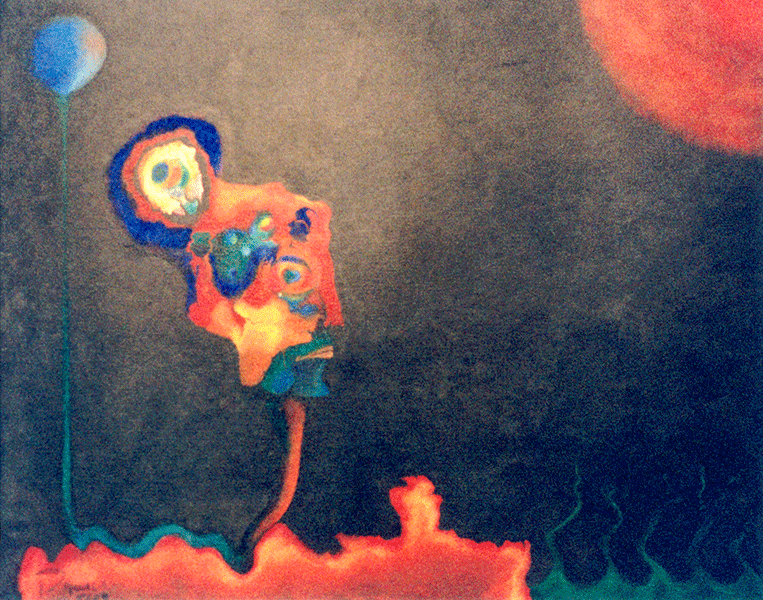
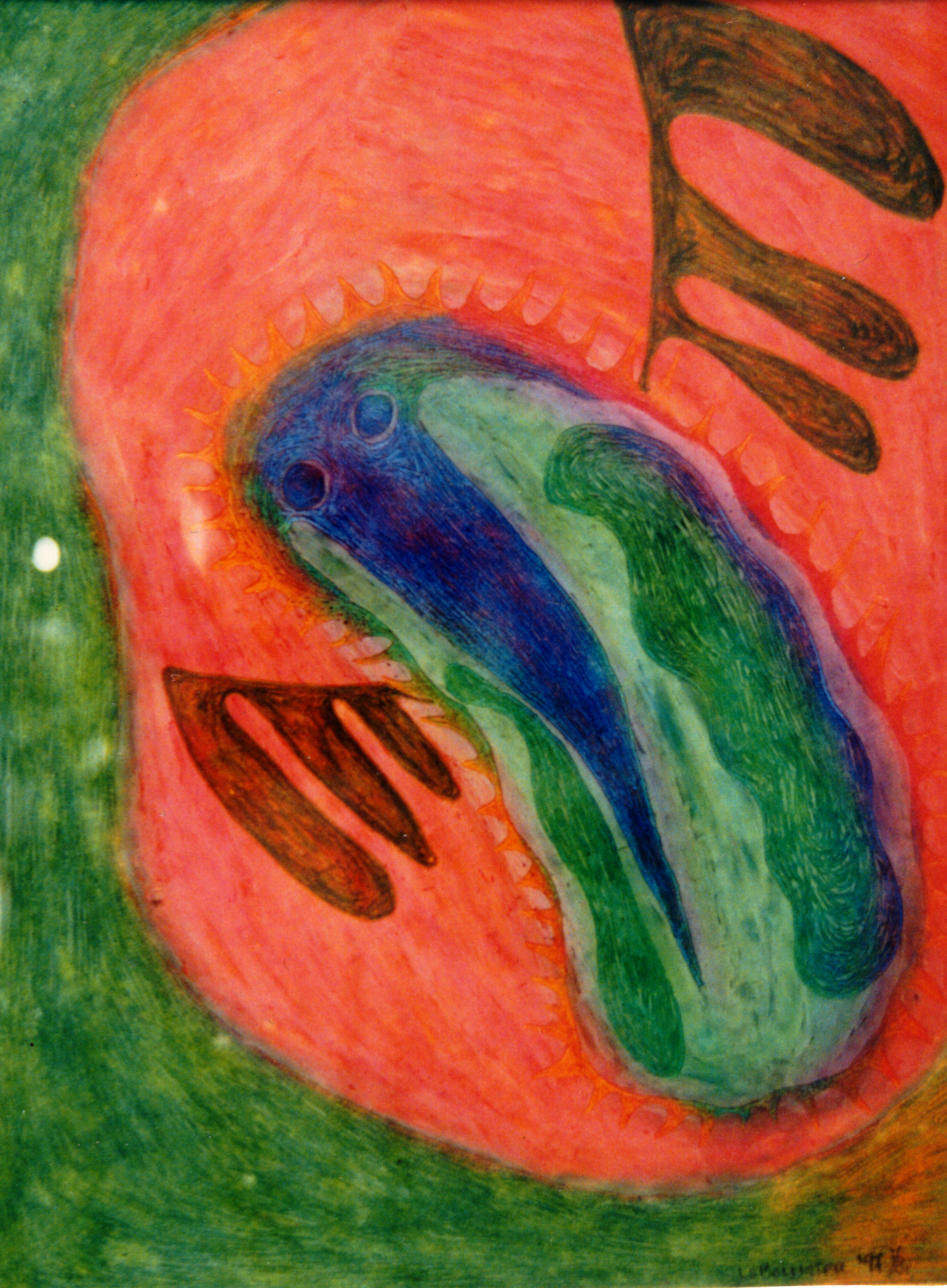

When I returned to Seattle, I didn't have much of a plan. Randall mentioned a house in the University District where a number of people were already living.
It was known simply as The Yellow House.
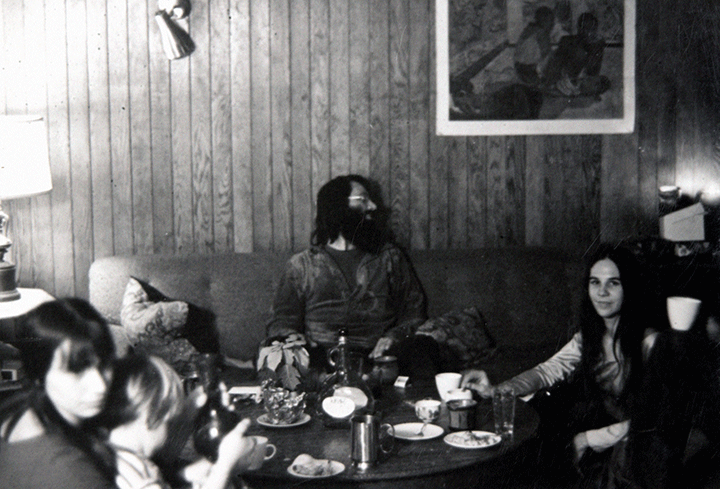
The Yellow House seemed less like a residence than a crossroads. Musicians drifted in and out. Artists appeared unexpectedly. Friends of friends became roommates for a week, sometimes a month. Nobody seemed entirely sure who officially lived there anymore.
Seattle's underground music and art scene felt astonishingly interconnected. Bands shared rehearsal spaces. Artists shared houses. Coffeehouses became galleries. Someone always knew someone working on a record, a painting, or another impossible idea.
The house seemed to exist on the edge of something larger. Music, art, and ideas moved through the house almost as freely as the people did. It felt as though everyone was creating something, even if none of us knew where it might eventually lead. Looking back, it’s impossible for me to separate The Yellow House from the creative energy that surrounded Seattle at the time.
Returning to Seattle also meant returning to the Speakeasy. Henry welcomed me back as though I had never left and offered me another exhibition. It would be the last show I had there before the café eventually closed its doors. Looking back, it feels like the end of an important chapter, not only for me, but for a place that had quietly become one of the creative hearts of the neighborhood.
Weekends often took us to an abandoned farm on Bainbridge Island. Somehow everyone always managed to get there. We built bonfires that burned late into the night, talking, laughing, playing music, and watching sparks disappear into the darkness.
For a while, the city disappeared. Monday always came too soon.
One of my roommates, Johnny Nemo, was working construction downtown and mentioned they were looking for more laborers. A week after returning to Seattle, I was carrying a hardhat instead of a sketchbook.
Days were spent dismantling a five-story warehouse across from the Kingdome, transforming it into what would eventually become upscale condominiums. The roof disappeared first. Then the freight elevators. Chainsaws, sledgehammers, crowbars, and endless flights of stairs became part of everyday life.
When Seattle rained—and Seattle always seemed to rain—the water slowly worked its way through every floor of the building. Temporary electrical outlets balanced on metal legs stood in inches of water while extension cords disappeared into the puddles.
Looking back, I suspect OSHA would have had a few questions.
As much as I loved the people in the house, I gradually realized that community and solitude weren't opposites.
I needed both.
Eventually I began looking for a place of my own.
By then I'd learned not to question the urge to move. Sometimes it arrived quietly, with no better explanation than the feeling that it was time. The current carried me back toward Denver once again.
Summer arrived with another invitation. Four friends were planning a road trip to a cabin tucked into the canyons along the Rio Grande near South Fork, Colorado, and asked if I wanted to come along. I didn't need much convincing. I'd never really explored the American Southwest, and the thought of spending a month surrounded by mountains and open country felt irresistible.
Five of us squeezed into a pickup truck with a camper shell. Two rode in the cab. Three of us made ourselves comfortable in the back. We camped our way across the West, slowly trading Seattle's gray skies for the high desert and the mountains of southern Colorado.
Once we reached the cabin, I fell into another familiar rhythm. Every morning I ran through the canyons. Bleached bones lay scattered among the pines and boulders, reminders that the landscape belonged to something much older than us. I ran for miles each day, then spent my evenings painting.
That summer I decided to experiment with acrylic paints. They dried too quickly for the way I liked to work. I missed the slower conversations that oil paint allowed, and by the end of the trip I knew I wouldn't be returning to acrylics anytime soon.
By the time the trip came to an end, everyone else was heading back to Seattle. I found a pay phone and called Jeff at Paris on the Platte. I asked if he needed any help around the café.
"Actually," he said, "I could use an assistant manager."
I also called Josh, who laughed when I asked whether my old room was still available.
"Come on back," he said.
So while my friends continued northwest toward Seattle, I climbed onto a Greyhound bound for Denver.
It seemed the conversation wasn't finished yet.
When summer ended, I found myself back in Seattle once again. This time I wasn't entirely sure what came next. One idea, however, refused to leave me alone.
Silk screening.
With no idea where to begin, I stepped into a phone booth, picked up a copy of the Yellow Pages, and looked under Silk Screen Printing.
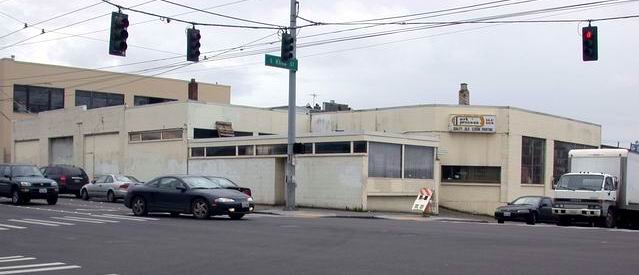
The first company listed alphabetically was a small shop in Seattle's International District called Art Process.
I copied down the address, caught a bus downtown, and found myself standing on the corner of 12th Avenue South and South King Street.
The building didn't look particularly remarkable.
From the outside it was just another industrial shop.
I stood there for a minute trying to decide what I was going to say.
I had never worked in a silk-screen shop.
In fact, I knew almost nothing about silk-screening.
Finally, I decided there wasn't much point standing on the sidewalk any longer.
I opened the door.
Brian Hata, the owner, looked up from his work.
I introduced myself and explained that I'd become interested in silk-screening, even though I had very little experience. Then I asked if they happened to be looking for anyone.
He looked me over for a moment.
Then, almost casually, he said,
"Sure. We can take you on as an apprentice. You start Monday."
Just like that.
Life quietly opened another door.
For the next six months I reclaimed screens, washed screens, coated them with emulsion, exposed artwork, picked up supplies/made deliveries in the company van, and prepared screens for the printers. It was demanding physical work. Some of the screens measured nearly seven feet by fifteen feet, and they never seemed to stop coming.
The shop operated with a skeleton crew—three printers and me.
Day after day I watched, listened, and learned.
Eventually Brian handed me my first printing assignment.
Nirvana bumper stickers.
Another Door
Over the following months my apprenticeship became a real education.
Brian and the printers taught me far more than how to push ink through a screen. I learned color mixing, screen preparation, registration, and how different materials demanded entirely different approaches. Posters, art prints, bumper stickers, desk signs, Seattle Metro bus banners, Starbucks displays—every project seemed to require its own techniques and its own chemistry.
Some jobs used poster ink. Others required vinyl, epoxy, or ultraviolet-curing inks. Every material seemed to have its own personality. I had no idea then how much those chemicals would eventually affect me, but at the time I was simply fascinated by the process. There was always something new to learn.
As my responsibilities grew, I spent more time behind the wheel of the shop's aging Chevrolet delivery van. I picked up supplies, delivered finished work, and gradually came to know Seattle neighborhood by neighborhood. Long before GPS was commonplace, I was learning the city by repetition—street by street, bridge by bridge, until the map slowly became part of my memory.
My own artwork continued to grow alongside everything I was learning at Art Process.
The studio apartment overlooking Ivar's Smokehouse was still modest, but compared to the room at the St. Charles it felt almost luxurious. For the first time I had enough space to work on larger paintings, and the canvases gradually began to grow with my confidence.
The paintings I'd begun in Belltown finally had room to breathe, and new ones quickly followed.
Canvas was expensive, so I painted primarily on Masonite—hardboard panels that were durable, smooth, and, most importantly, affordable.
A lumber yard a few miles away carried full four-by-eight-foot sheets.
Whenever I needed another sheet, I'd ride my bicycle to the lumber yard and somehow balance it all the way home.
One hand stayed on the handlebars.
The other braced the Masonite against my shoulder and the side of my head while I pedaled slowly through Seattle.
Looking back, I'm amazed I never caught the wind and ended up sailing across Portage Bay.
Fortunately, the panels always made it home.
And so did I.
The apartment sat directly beneath the two-level Interstate 5 bridge crossing Portage Bay. Cars and trucks passed overhead twenty-four hours a day.
Krissy and I would sometimes joke about when a semi-truck was finally going to come crashing through the ceiling.
About a year after I'd moved out, I was watching the evening news when a traffic helicopter appeared to be hovering over my old apartment.
A semi-truck had gone over the edge of the bridge and was hanging by its trailer directly above where my apartment had been.
It suddenly didn't seem quite so impossible.
Somewhere along the way I stopped hearing the traffic.
In my mind it became a waterfall.
I slept just fine.
Outside of work, life settled into another familiar rhythm. I still found myself at places like the Frontier Room, the Vogue, and the cafés that had become part of my everyday orbit. But increasingly, movement itself became part of my routine.
Running had evolved from exercise into something closer to meditation.
My favorite route formed a ten-mile loop beginning near Ivar's, following the Burke-Gilman Trail toward Roanoke Avenue, circling Green Lake, continuing down Stone Way to Gas Works Park, and finally reconnecting with the trail back home.
I owned little more than a bicycle, a pair of running shoes, and a bus pass.
If I wasn't riding, I was running.
If I wasn't running, I was walking.
Looking back, I realize I experienced Seattle at human speed. I learned the city one neighborhood, one conversation, and one mile at a time.
The Messenger
I loved working at Art Process.
Every day I learned something new, whether it was a different printing technique, a new way of mixing colors, or another lesson from the printers who had quietly taken me under their wing.
One afternoon Brian called me into his office.
Business had slowed.
There simply wasn't enough work to keep everyone busy.
He looked genuinely disappointed as he told me he was going to have to let me go.
Before I left he said something I've never forgotten.
"When things pick up, I'll hire you back."
I believed him.
The problem was, I still needed a job.
I wasn't sure what to do next.
Then it occurred to me that I'd already spent months driving deliveries all over Seattle for Art Process.
I knew the city.
I loved riding my bicycle.
I'd been playing in traffic for years anyway.
Why not make a living doing it?
So I walked into Elliott Bay Messenger and applied for a job.
A few days later, I was a bicycle messenger.
Just like that, my office became the streets of Seattle.
The work was exhilarating.
Ten- and eleven-hour days weren't unusual. Rain or shine, I rode from one end of the city to the other carrying everything from legal documents to architectural drawings and forgotten packages that suddenly became emergencies. Seattle's hills quickly taught me which streets to avoid and which shortcuts only messengers seemed to know.
The traffic was relentless.
There were close calls almost every day. Taxi drivers, delivery trucks, buses, and pedestrians all competed for the same few feet of pavement. More than once I wondered how any of us managed to survive for as long as we did.
Strangely enough, I loved it.
Every delivery became a puzzle. The fastest route wasn't always the shortest. Sometimes knowing one alley, one staircase, or one service entrance saved more time than another mile of riding.
Before long, Seattle no longer felt like a city I lived in.
It felt like a city I knew.
There were certain deliveries I secretly hoped for.
Anything near Broadway on Capitol Hill meant there was a good chance my next run would take me down Denny Way toward downtown.
It was my favorite hill in Seattle.
From the crest, the city simply fell away beneath you.
Gravity did most of the work.
The trick was reading the traffic far enough ahead to choose your line before you reached it. If everything came together just right, you could carry your speed all the way toward the waterfront, flowing between cars and timing the lights almost perfectly.
For a few glorious minutes, it felt less like commuting and more like flying.
One delivery in particular has stayed with me all these years.
I was riding along the sidewalk, approaching an intersection where I intended to hop off the curb and cross the street.
Just as I left the curb, a massive Harley-Davidson pulled directly into my path.
The rider, a rather large woman, was looking the other direction and never saw me.
I hit the motorcycle broadside.
The impact launched me clean over both her handlebars and my own.
When I opened my eyes, I found myself staring at the underside of the motorcycle. The rear wheel was spinning at full throttle only a few feet from my face while the bike lay on its side.
Somehow I hadn't been seriously hurt.
I scrambled to my feet and asked if she was alright.
She was.
So I climbed back on my bicycle and headed off to my next delivery.
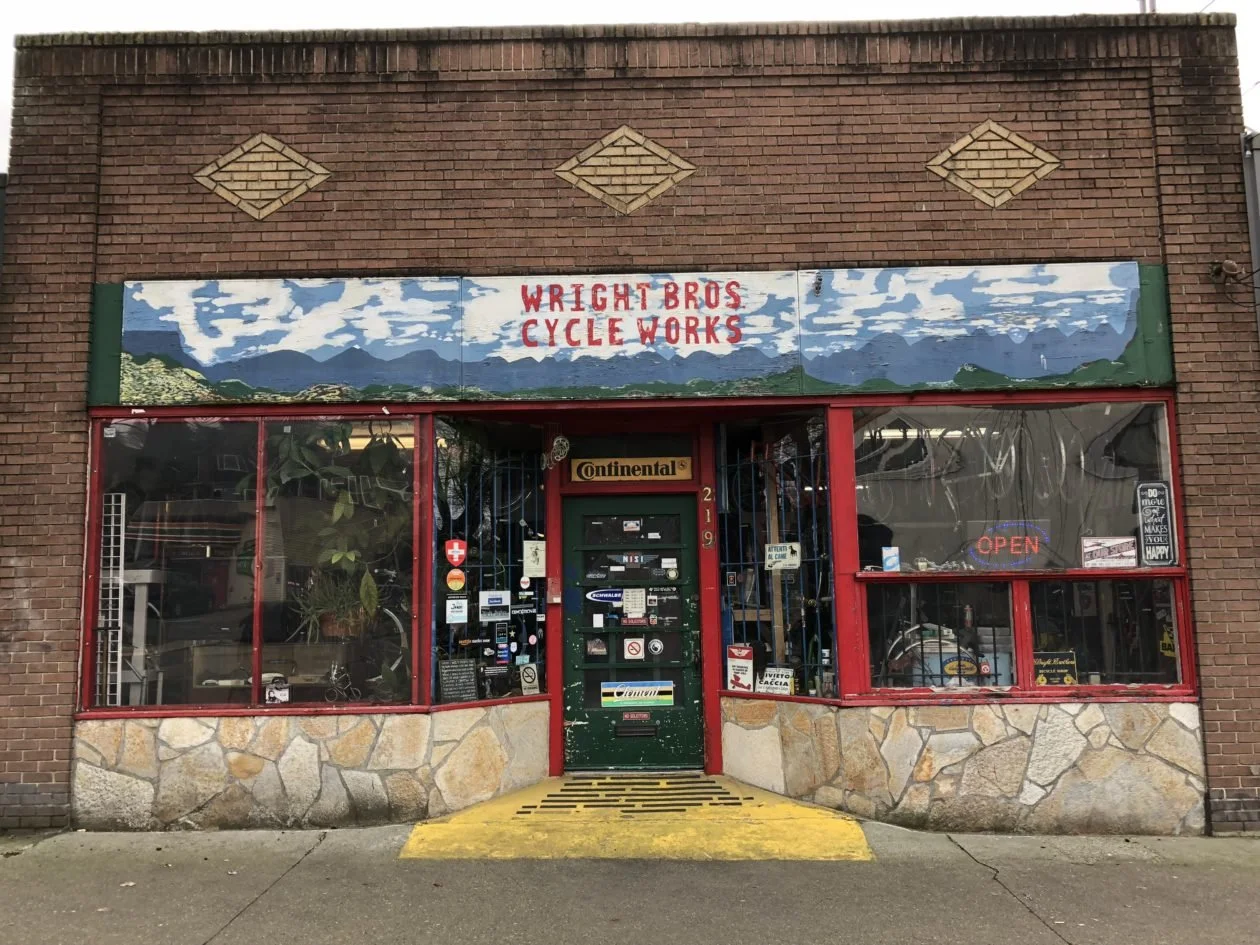
During those years I also discovered Wright Brothers Cycle Works in Fremont.
It was a tiny neighborhood bicycle shop with a cast-iron wood stove, work stands, and tools available to anyone who held a lifetime membership.
I bought one almost immediately.
The shop became another home.
There always seemed to be someone rebuilding a wheel, adjusting gears, or talking about the perfect frame. Before long I was learning how to true wheels, overhaul hubs, and build bicycles from the ground up.
One rainy afternoon I bought a new set of tires and decided to install them in the shop.
Unfortunately, I'd managed to pinch the inner tube between the tire and the rim.
Completely unaware of what I'd done, I kept pumping.
And pumping.
Then...
BANG!
The tube exploded like a shotgun.
The shop's old bulldog had apparently slept through years of hammers, dropped tools, and general bicycle chaos without so much as lifting his head.
That day he launched nearly four feet straight into the air.
I don't think anyone laughed harder than I did.
The work was exhilarating, but it was also exhausting.
By the end of most days I'd ridden farther than I ever would have imagined, often through rain, traffic, and Seattle's endless hills.
Weekends belonged to painting.
Whatever energy I had left usually found its way onto another sheet of Masonite.
Messenger work was paid by commission, and some weeks there simply weren't enough deliveries to make ends meet.
There were times when the local food bank helped bridge the gap.
I never thought much about it.
It kept me fed, and it kept me painting.
Eventually, one close call wasn't a close call anymore.
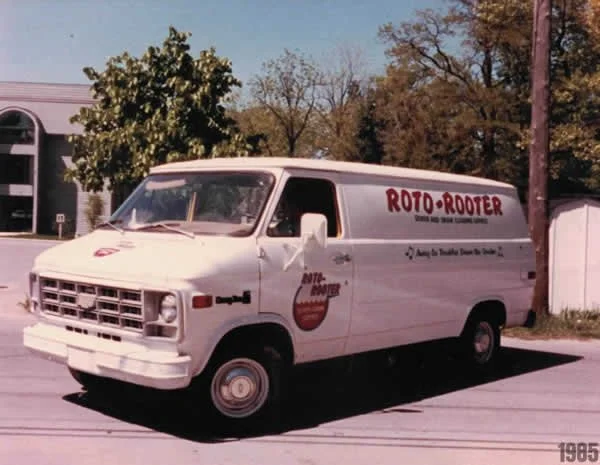
One afternoon I was drafting about a foot behind a Rotor-Rooter van on Fourth Avenue. The timing of the traffic lights through downtown Seattle was almost perfect, and tucked in behind the van I knew I'd make nearly every green light on my way toward Pioneer Square, where another delivery was waiting.
Everything was going exactly according to plan.
Until it wasn't.
Without warning, a homeless man stumbled into the street directly in front of the van.
The driver slammed on the brakes.
At that distance there was nowhere for me to go.
I hit the back of the van at more than thirty-five miles an hour.
It happened directly in front of the Nordstrom flagship store, where an outdoor coffee cart had drawn a long line of morning customers.
They had front-row seats.
Even now, I can still hear the collective "Ooooh..." as I flew into the back of the van.
My only thought was getting out of traffic.
I picked myself up, pushed the bicycle onto the sidewalk, and assured everyone who stopped to ask that I was alright.
At least, I thought I was.
I climbed back on the bike and managed another couple of blocks before I realized something was very wrong.
My knees had swollen to the size of small cantaloupes.
I called the messenger office and asked someone to come pick me up.
That afternoon turned out to be my last delivery.
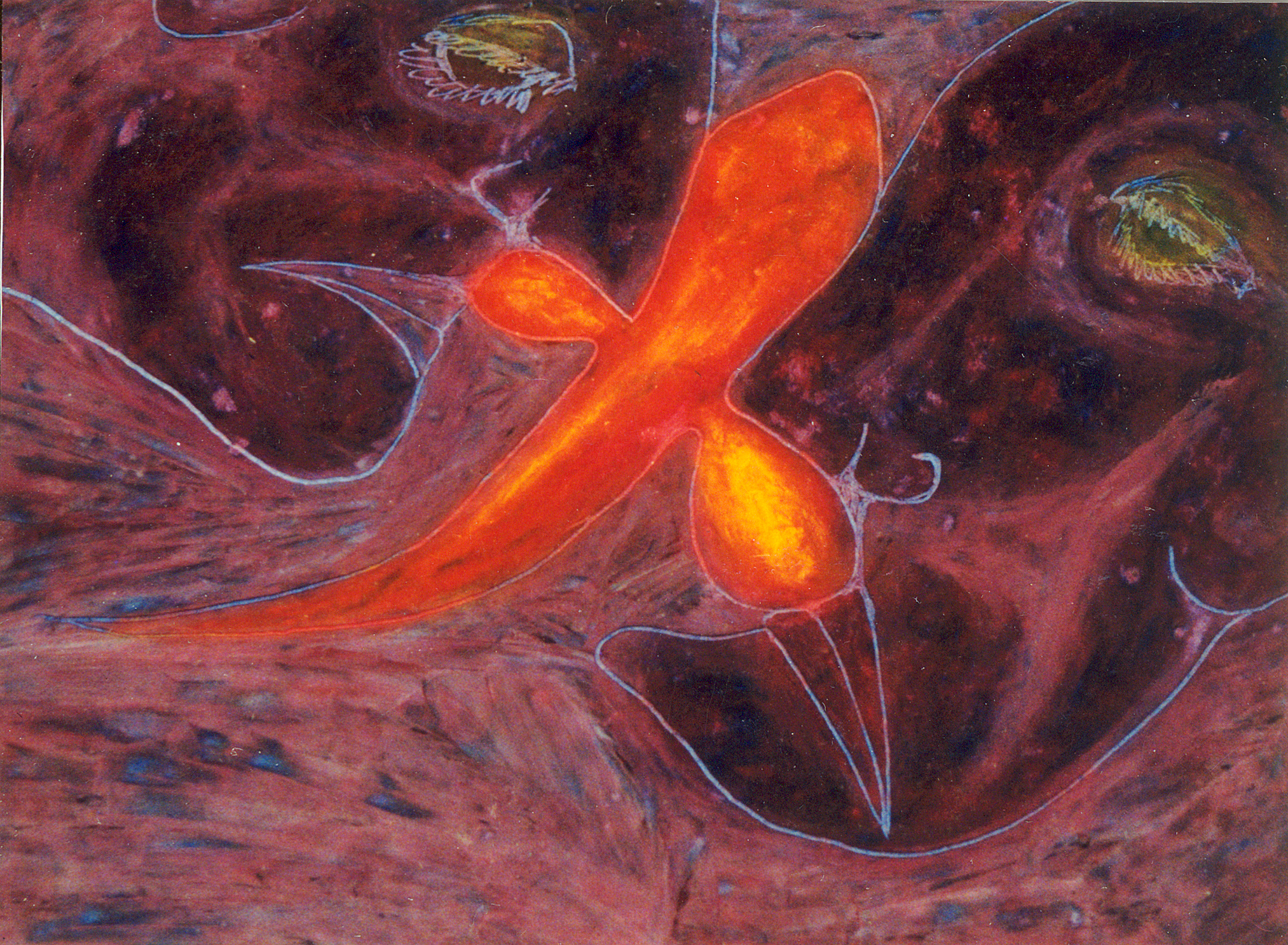
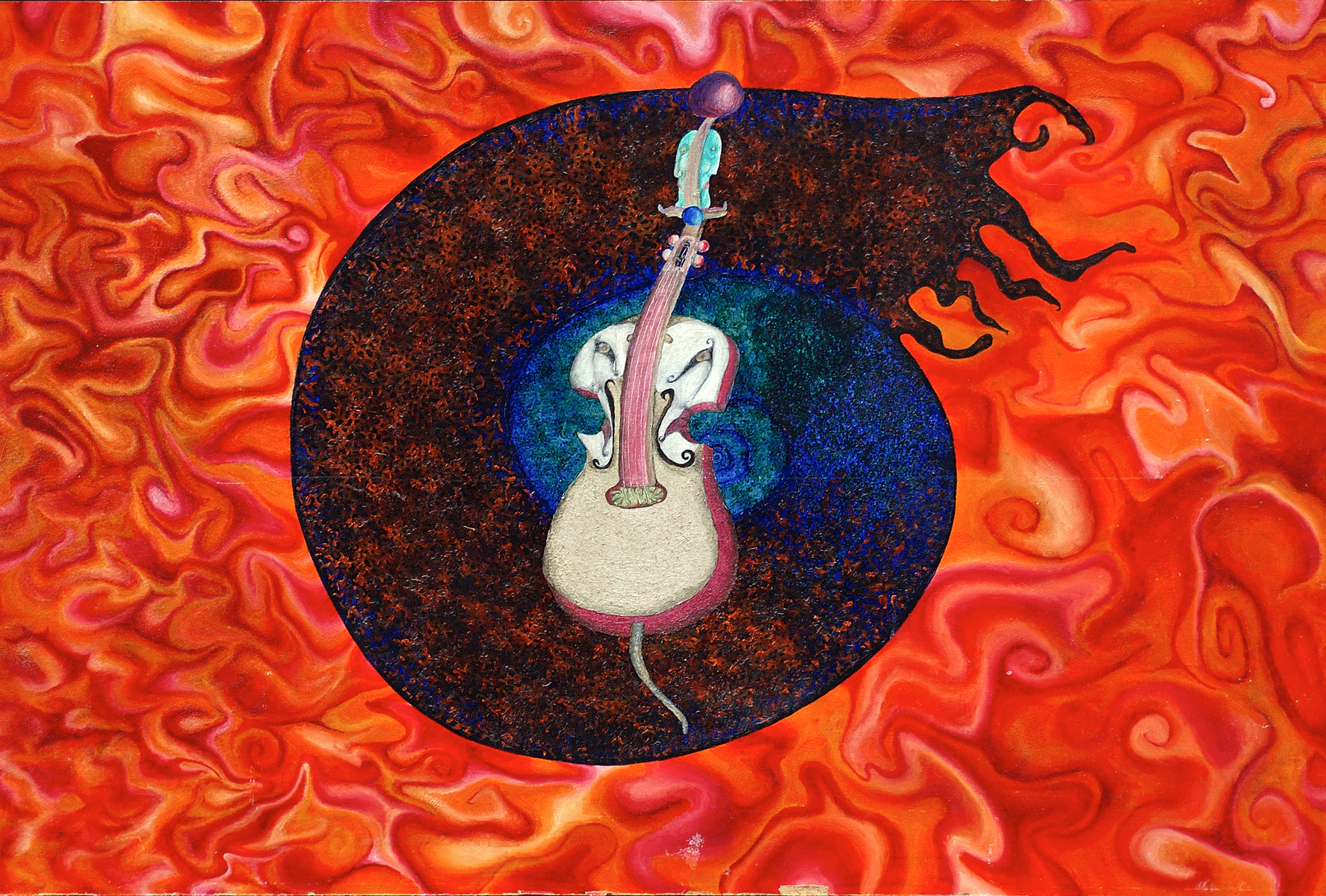
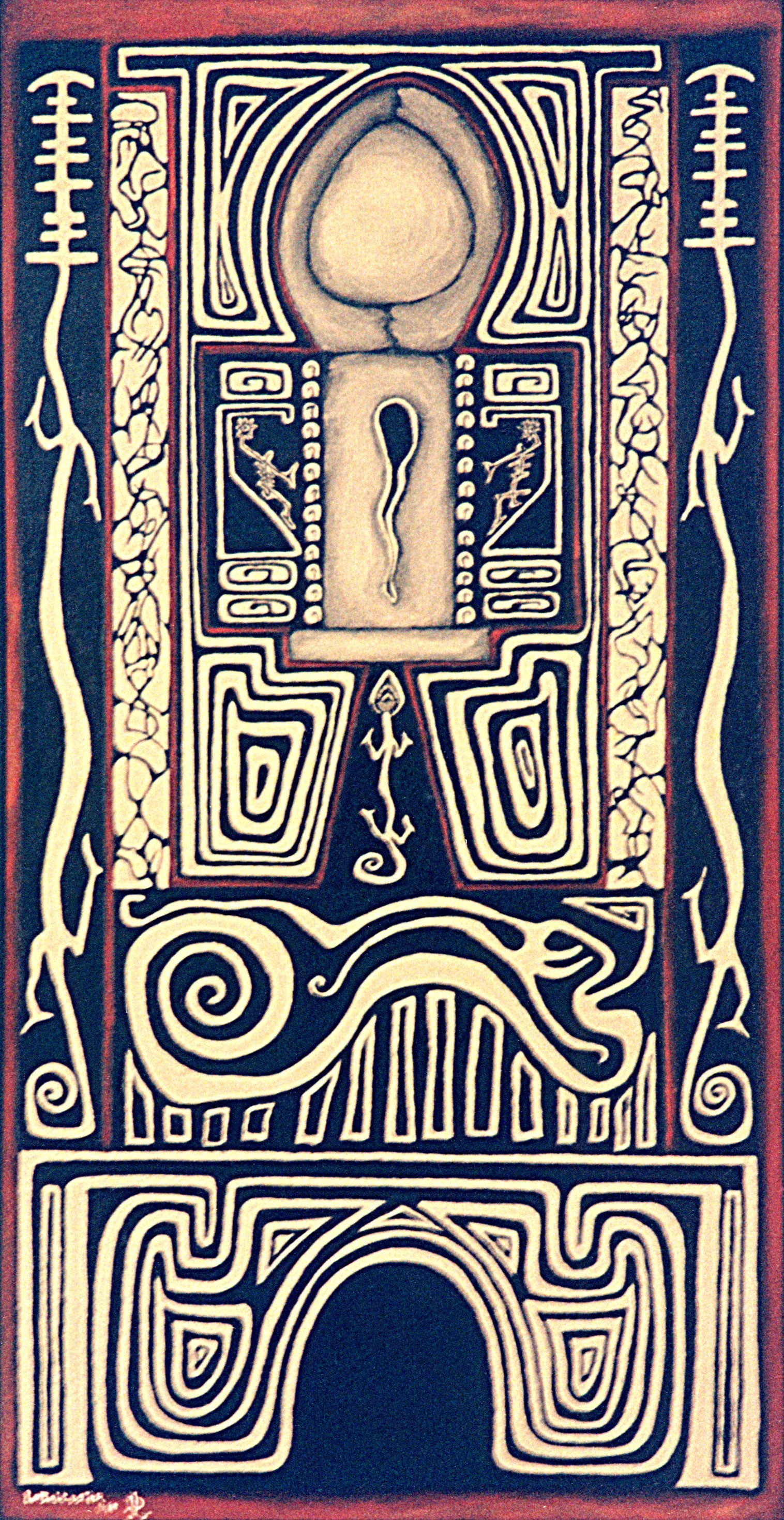
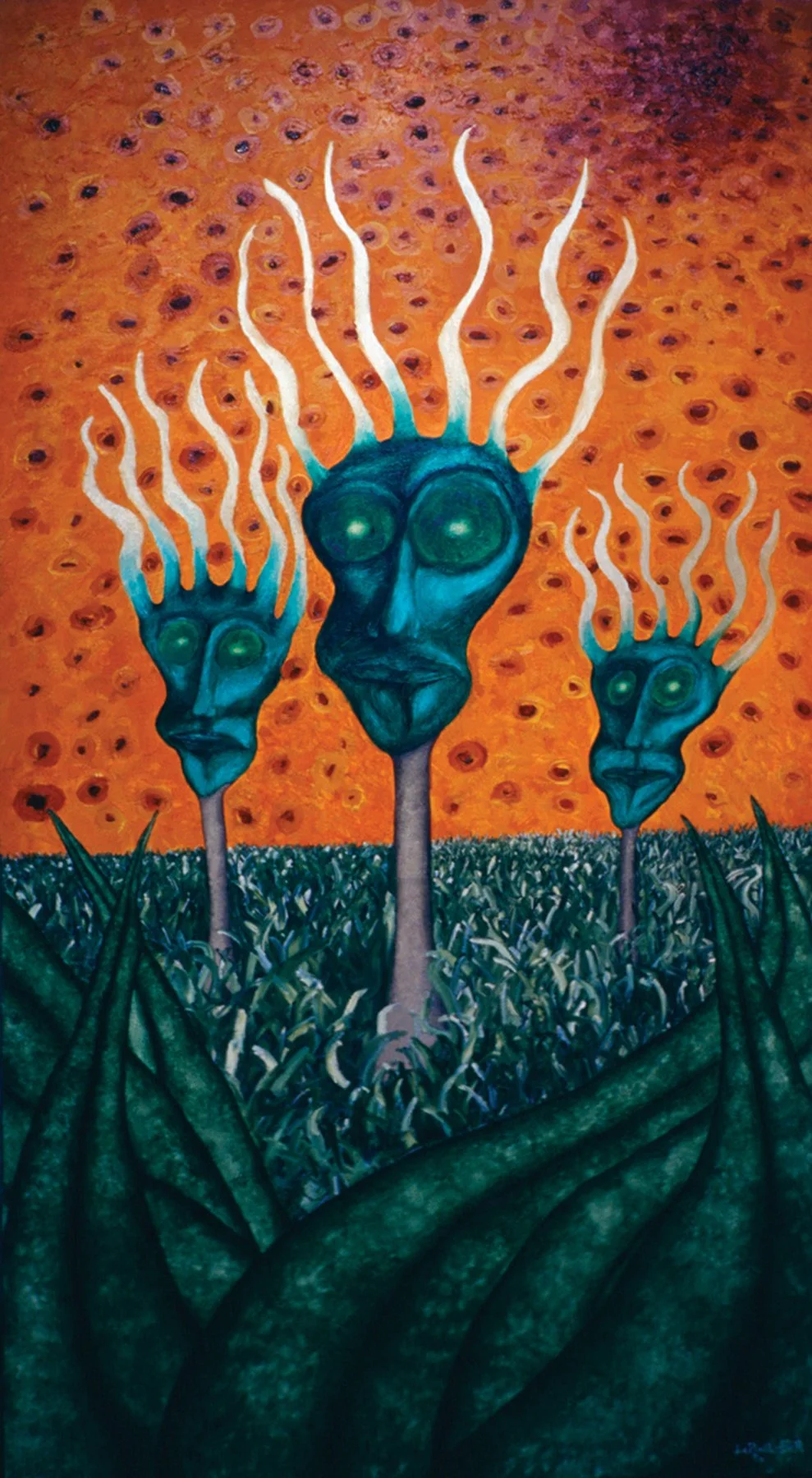
Onion Heads, 1992 - Oil on Masonite
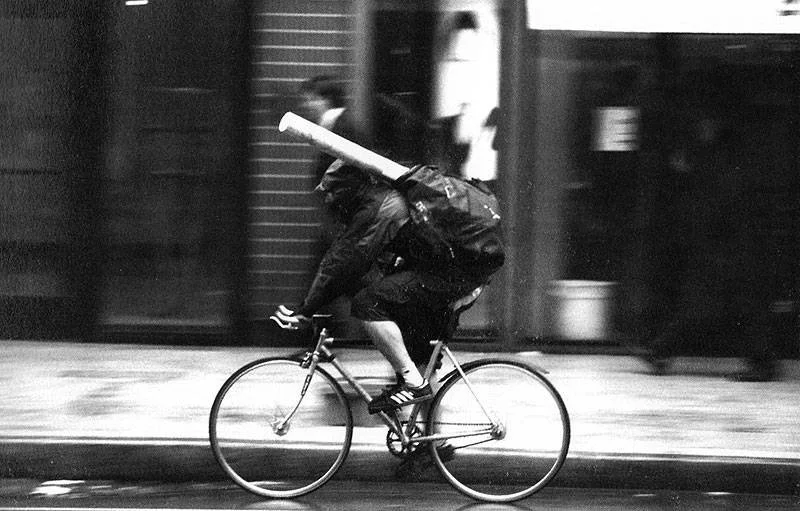
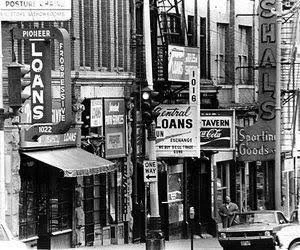
Not me, but you get the idea.